Best AI App Builder for E-commerce (2026): Storefront vs Ops App
There is no single best AI app builder for e-commerce, because the phrase hides two jobs. Use Shopify or Medusa for the storefront; use Replit, Bolt.new, Lovable, v0, or Base44 for the custom ops app. A 2026 comparator scored on the axes that matter.
Updated on August 23, 2026
On this page
Quick answer (2026)
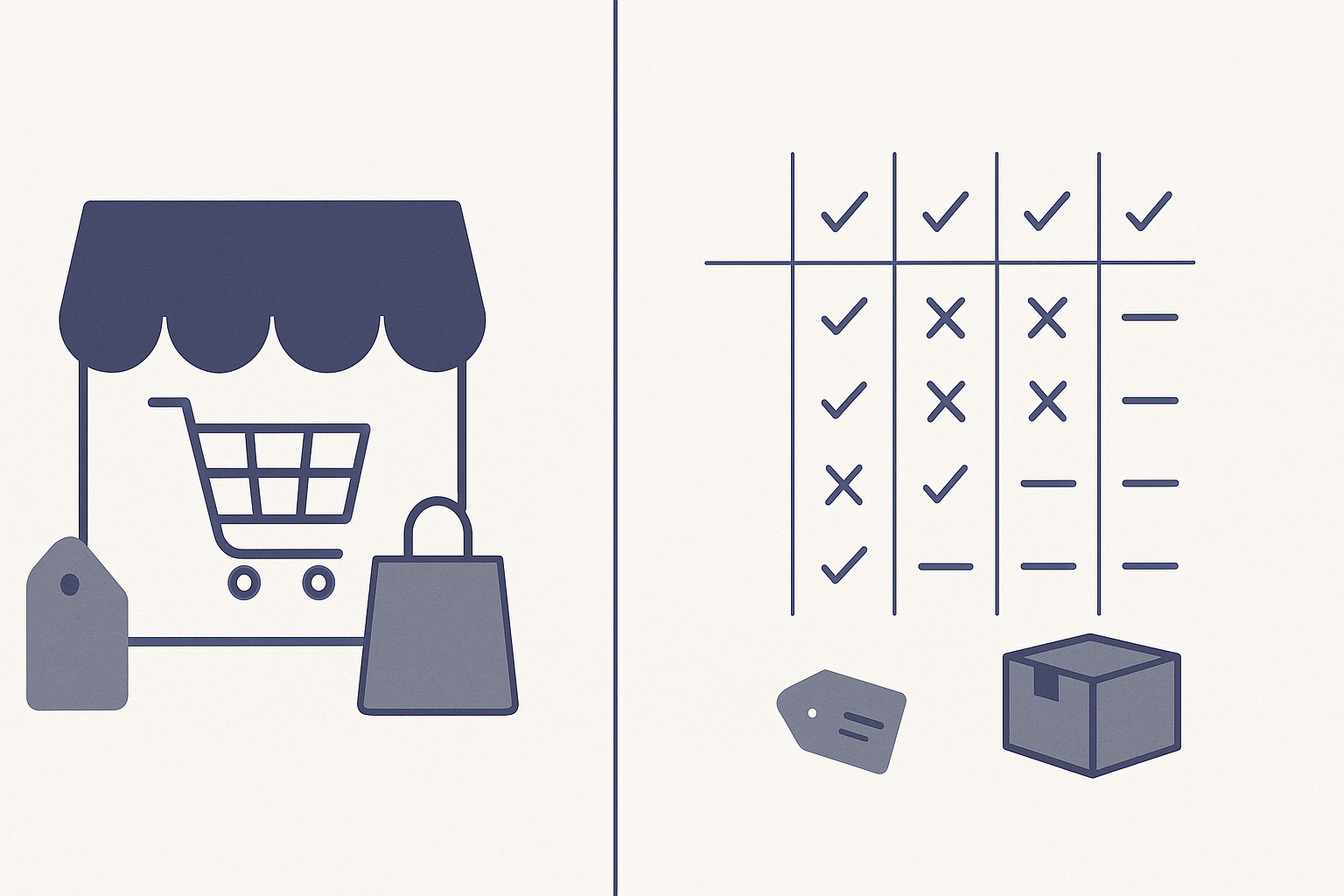
There is no single "best AI app builder for e-commerce," because the phrase hides two very different jobs. If you mean the storefront (product pages, cart, checkout, tax, shipping), a general AI app builder is the wrong tool in 2026: use Shopify (or Medusa if you want to own the code). If you mean the custom app around your store (an inventory dashboard, a wholesale/B2B ordering portal, a returns tracker, subscription logic your platform cannot express), then an AI app builder earns its place, and the cohort splits cleanly. On the criteria e-commerce operators actually care about (a real database, payments, customer and staff accounts, and the ability to talk to your Shopify and Stripe data), Replit and Bolt.new lead, Lovable is the fastest path to a simple ops dashboard, v0 suits teams already coding in the Vercel stack, and Base44 is quickest to a throwaway internal tool but hardest to integrate. Pick by which job you are actually doing.
"Best AI app builder for e-commerce" is really two questions
Search that phrase and the results quietly disagree with each other. Some rank Shopify, Wix, and Squarespace. Others rank Lovable, Bolt, and Replit. They are answering different questions and mostly not saying so.
The cleanest statement of the split came from an actual builder, not a vendor. In an r/nocode thread on AI builders for online stores, the top reply is blunt: the tools people reach for, "like Replit, Bolt, and Lovable are for building apps from scratch, not Shopify storefronts." That is the whole article in one sentence. An AI app builder generates a bespoke web application. A store platform gives you a merchandising, checkout, tax, and payments engine that took Shopify a decade to harden. Asking a prompt-to-app tool to reproduce that from zero is how you end up with a checkout that miscalculates VAT.
So separate the two jobs before you pick anything.
- The storefront. Catalog, cart, checkout, discounts, tax, shipping, payments. In 2026 the honest picks are hosted commerce platforms. Shopify is the default; its built-in Shopify Magic handles product copy and support replies without an app install. If code ownership matters more than convenience, Medusa is an open-source, self-hostable commerce engine you run yourself. Neither is an "AI app builder," and that is the point.
- The custom app around the store. This is where the platform runs out of road: a supplier-facing purchase-order portal, an internal inventory and reorder dashboard, a wholesale pricing tool, a subscription-box scheduler, a returns and RMA tracker. Your store platform was not built to express these, and off-the-shelf apps rarely fit your exact workflow. This is the job an AI app builder is genuinely good at.
Builderdex does not sell an app builder or a store platform, so we can say the quiet part: for most people typing "best AI app builder for e-commerce," the storefront answer is "not one of these, use Shopify," and the interesting question is the ops app.
The five AI app builders, scored for e-commerce ops
We scored the five general-purpose AI app builders on the axes that decide whether a custom e-commerce operational app actually works in production, not on which one makes the prettiest landing page. Logos priced from each vendor's official pages, checked July 2026: 


Scroll to see more
| Builder | Real database | Payments (Stripe) | Auth + staff/customer accounts | Connects to Shopify / Stripe APIs | Owned, exportable code |
|---|---|---|---|---|---|
| Replit | Yes (Postgres) | Via keys | Yes | Yes (any npm SDK) | Yes |
| Bolt.new | Yes (Supabase) | Via keys | Yes | Yes | Yes |
| Lovable | Yes (Supabase) | Via keys | Yes (Supabase RLS) | Yes | Yes |
| v0 | You wire it | You wire it | You wire it | Yes, if you code | Yes |
| Base44 | Yes (built-in) | Via keys | Yes | Limited (no npm import) | Partial (lock-in) |
Replit: the most complete backend for an ops app
Replit is the closest thing in the cohort to a full application platform: a Postgres database, auth, background jobs, and unrestricted npm imports, which means you can pull the official Shopify and Stripe SDKs and sync real order and inventory data. That flexibility is exactly what an operational app needs. The trade-off is speed: a public 2026 benchmark that had six builders build the same CRM SaaS flagged Replit as the slowest of the group, with builds that can run long. For an internal tool you iterate on weekly rather than ship hourly, that is an acceptable tax.
Bolt.new: strong full-stack, watch the token bill
Bolt.new pairs a clean build experience with a Supabase Postgres backend, so a wholesale ordering portal or a reorder dashboard is well within reach, and you can integrate Stripe and external APIs through keys. The same 2026 benchmark rated Bolt's output among the cleaner UIs but flagged fast token consumption and a thin free tier, so budget for the usage if your ops app is large.
Lovable: fastest route to a simple ops dashboard
Lovable is the quickest way to stand up a Supabase-backed CRUD dashboard, which covers a large share of real e-commerce ops needs: view orders, edit inventory, manage customers, gate access with row-level security. The honest caveat from the same benchmark is stability; Lovable was the group's most crash-prone builder, so plan for iteration when the schema gets complex.
v0: only if you already code in the Vercel stack
v0 is frontend-first. It produces excellent Next.js interfaces, but the database, auth, and payments are yours to wire. For an e-commerce team already living in the Vercel ecosystem with a developer on hand, that is fine and even preferable. For a non-technical operator who wanted the tool to handle the backend, it is the wrong pick.
Base44: quick internal tool, but integration is the ceiling
Base44 is the fastest to a working app and ships an all-in-one backend, so a standalone internal tool comes together quickly. The limitation matters specifically for e-commerce: no npm import means pulling the Shopify or an ERP SDK to sync live data is awkward, and the platform leans toward lock-in. Use it when the ops app is self-contained and does not need to marry into your existing store data.
When an AI app builder is the wrong tool
Reach for Shopify or Medusa, not any builder above, when the job is the store itself. Checkout is a regulated, fraud-sensitive, tax-aware surface, and payment providers, card networks, and tax rules change constantly. A generated checkout is a liability you will maintain forever. The 2026 listicles that name Shopify, Wix, and Squarespace for "AI e-commerce builders" are right for that job; they are simply answering the storefront question, not the ops question.
The reverse is also true. If your platform genuinely cannot express your workflow (tiered wholesale pricing, a supplier portal, a subscription cadence with skip-and-swap logic), no amount of Shopify apps will fit it perfectly, and that is precisely when a custom app from an AI builder beats bolting on another plugin.
How we scored
The axes above are the ones that separate a demo from a tool your operations team uses on a Monday: a real database so orders and inventory persist and query correctly; payments you can wire without a rebuild; accounts so staff and customers see only what they should; API reach so the app reflects live Shopify and Stripe data instead of a stale copy; and owned code so the tool survives your store outgrowing it. We did not score visual polish, because an internal ops app is judged on whether the numbers are right, not on its hero section.
The decision, in one line
Building the store? Use Shopify, or Medusa if you want to own it. Building the custom app around the store? Start with Replit or Bolt.new for a real backend, drop to Lovable for a fast Supabase dashboard, choose v0 only if you code in Vercel, and keep Base44 for self-contained internal tools that never need to sync your live commerce data.
Written by
Builderdex EditorialBuilderdex compares AI app builders on the criteria that decide real outcomes. We do not sell a builder, so our scoring favors no vendor.
Frequently asked questions
What is the best AI app builder for e-commerce in 2026?
It depends on the job. For the storefront (catalog, cart, checkout, tax, payments), use a commerce platform like Shopify, or Medusa if you want to own the code, not a general AI app builder. For a custom app around your store (inventory dashboards, wholesale portals, subscription logic), Replit and Bolt.new lead the AI-builder cohort because they ship a real database and can connect to your Shopify and Stripe data.
Can I build a Shopify storefront with Lovable, Bolt, or Replit?
You can generate a store-like app, but you should not use it as your real storefront in 2026. Those tools build apps from scratch; they do not replace Shopify's checkout, tax, and payments engine. Use them for the custom operational app that sits alongside your store, and let Shopify or Medusa run the storefront itself.
Which AI app builder connects to my Shopify and Stripe data?
Replit and Bolt.new are the strongest here because they support unrestricted package imports, so you can pull the official Shopify and Stripe SDKs and sync live orders, inventory, and payments. Base44 is more limited for this because it does not support npm imports, which makes deep integrations awkward.
Is Base44 good for e-commerce apps?
Base44 is the fastest to a working, self-contained internal tool and ships an all-in-one backend. Its ceiling for e-commerce is integration: without npm imports, syncing live data from Shopify or an ERP is awkward, and it leans toward vendor lock-in. Use it when the ops app does not need to marry into your existing commerce data.
Should I use an AI app builder or a Shopify app for custom store features?
If an existing Shopify app fits your workflow, use it. Reach for an AI app builder only when your workflow is specific enough that no off-the-shelf app fits, such as tiered wholesale pricing, a supplier portal, or a subscription cadence with skip-and-swap logic.
Medusa or Shopify for owning my store's code?
Shopify is the fastest, most hardened hosted option and the default for most merchants. Medusa is an open-source, self-hostable commerce engine you run yourself, so it fits teams that need to own and customize the storefront code. Both are storefront answers, not AI app builders.
Related comparisons
Best AI App Builder for Internal Tools (2026): Where an AI Builder Wins and Where It Doesn't
For internal tools, the honest answer is often not an AI app builder. Here is the axis that decides it: does the tool connect to your existing production data, or does it start greenfield? A 2026 comparator across five AI builders, plus when to buy a purpose-built platform instead.

Best AI App Builder for Non-Technical Founders (2026): Ship First, Own Later
For a non-technical founder, the best AI app builder is the one that ships a usable product without you touching hosting, a database, or a deploy. A 2026 comparator across Base44, Bubble, Lovable, Bolt.new, and Replit, scored for non-coders, plus the ownership fork nobody selling you a tool wants to name.