Open-Source Lovable Alternative: 4 Self-Hostable AI App Builders Compared (2026)
Four open-source, self-hostable Lovable alternatives compared on the axis that matters most in 2026: where your backend actually lives. Dyad, Open Lovable, Reflex and ai-app-builder-open, with honest tradeoffs and a run-it-yourself guide.
Updated on September 15, 2026
On this page
If you like what Lovable does but want the code, the server, and the data on your own terms, the honest shortlist in 2026 is short: Dyad, Open Lovable, Reflex, and the newer ai-app-builder-open. They are all open source, but they are not the same kind of tool, and the difference that matters most is rarely the one the listicles talk about: where your backend actually lives.
This is a comparison written for two readers at once. If you are a non-technical founder, the first half tells you which one fits your situation in plain language. If you are a developer, the second half has the clone-and-run commands.
What "open-source Lovable alternative" actually means in 2026
Lovable is a hosted, chat-based AI app builder: you describe an app, it writes and runs a full-stack web app for you, on Lovable's servers. It is fast and friendly, but the app lives inside Lovable's platform.
"Open source" changes two things. First, the builder's own code is public, so you can read it, fork it, and run your own copy. Second, "self-hostable" means you can put that copy on your own machine or your own server, so your data and your generated apps are not locked inside someone else's account.
Here is the part most roundups skip. Being open source does not tell you where the app the builder generates is hosted, or where its database and login system run. That question splits this whole category in half, and it is the single most useful axis for choosing between these four.
The axis that actually separates them: where the backend lives
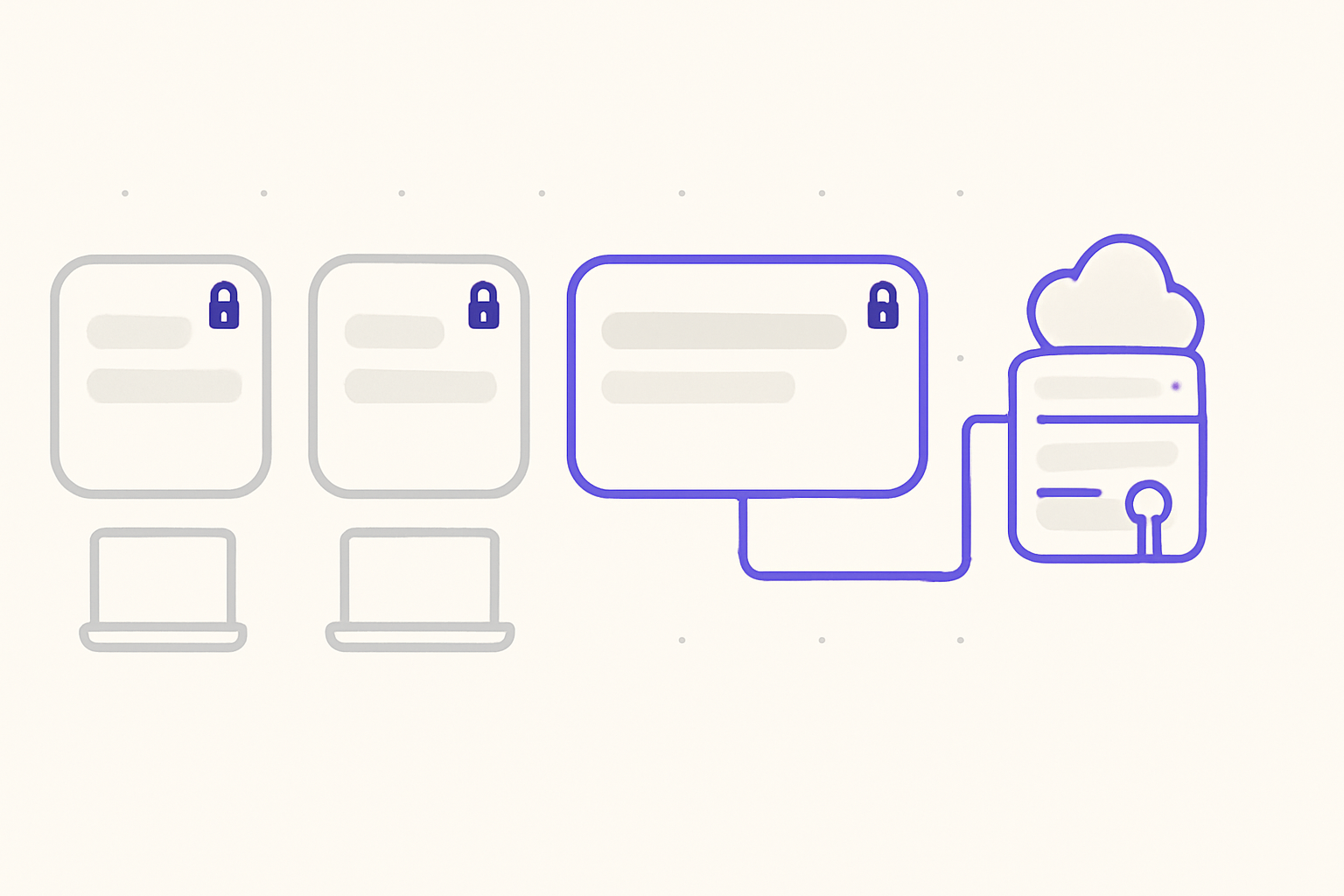
Two of these tools are local-first. They run on your laptop, generate code, and leave the hosting, database, and auth up to you (you wire in your own providers later). Two of them are closer to a full platform you can own, where the backend is handled for you.
Scroll to see more
| Builder | License / stars (2026) | What it generates | Where the backend lives | Best fit |
|---|---|---|---|---|
 Dyad Dyad | Open source, ~21k stars | Web apps, clean exported code | Local-first; bring your own hosting/DB (GitHub, Vercel, Supabase) | You want full local control and your own AI keys |
 Open Lovable Open Lovable | MIT, ~28k stars | React/Next.js front-end from a website or prompt | Front-end only; no backend included | Rebuilding a site's UI into React fast |
 Reflex Reflex | Open source (Apache-2.0) | Full-stack apps written in pure Python | You code it; optional Reflex Cloud to deploy | Python teams who want to write, not chat |
 ai-app-builder-open ai-app-builder-open | MIT, ~17 stars | Full-stack Next.js 16 app from a prompt | Managed backend (hosting, DB, auth, domains) via one API key | You want a self-hostable platform without wiring infra |
Logos are for identification only. Star counts are from each project's public GitHub page, July 2026, and change over time.
Dyad: the local-first favorite
The honest tradeoff: Dyad generates the app, but hosting, database, and auth are your job afterward (it integrates with GitHub, Vercel, and Supabase, but you set those up). That is exactly what a lot of developers want, and exactly what a non-technical founder does not.
Open Lovable: great for cloning a UI, not a full app
That makes it a strong tool for a narrow job (rebuild a marketing site's UI in React in minutes) and a poor fit if you need a working product with a login and a database behind it.
Reflex: the whole stack, but you write Python
reflex deploy, but the core experience is writing code, not describing it. If your team already lives in Python and wants the frontend and backend in one language, Reflex is the most "own the whole stack" answer on this list. If you wanted to avoid code entirely, it is the wrong door.
ai-app-builder-open: a self-hostable platform, backend included
It is an MIT-licensed, TypeScript project that turns a prompt into a full-stack Next.js 16 / React 19 app, and it ships the parts the others leave to you: hosting, a managed database, auth (Better Auth), custom domains, sandboxed previews, version history, live logs, and bidirectional GitHub sync. It describes itself as "a free, self-hosted, white-label alternative to v0, Lovable, Bolt and Replit."
The way it pulls that off is the honest catch. All of that managed infrastructure comes from a single dependency: the app is a thin proxy to the Totalum App Builder API, wired through one environment variable, TOTALUM_VCAAS_API_KEY. There is no npm SDK; the server just forwards requests so the browser never sees your key. You can read exactly how in the Totalum App Builder API overview, which documents the project-create, build, deploy, and domain endpoints the builder calls.
So the code is yours and self-hostable, but the backend that makes it feel like Lovable is a paid, hosted API that needs a positive credit balance. If your entire reason for leaving Lovable is to depend on no one's servers and no one's billing, ai-app-builder-open does not deliver that; Dyad does. If your reason is to own a Lovable-like platform without hand-assembling hosting, a database, and auth, this is the only project here that hands you all of it behind one key.
Update, September 15, 2026: the project now ships in two editions. Alongside ai-app-builder-open, which remains the neutral white-label starter, the maintainers published a second repository branded Creable, which its own documentation describes as the same engine with a README and defaults aimed at people migrating from Lovable. Same MIT licence, same single-API-key architecture, same honest catch about the hosted backend. Creable was created on September 15, 2026 and carries 2 stars, so it is newer still and even less proven. Treat the two as one option wearing two skins rather than as two independent entries on this list, and pick whichever README matches the job in front of you. If your interest is specifically rebranding and reselling one of these, the licence and infrastructure questions that decide it are scored separately in best AI app builder to white-label and resell.
Run ai-app-builder-open yourself (the developer path)
Because it is the one that is genuinely "prompt in, deployed app out" and self-hostable, here is the actual quickstart. You need Node.js 20 or newer.
# 1. Clone and install
git clone https://github.com/totalumlabs/ai-app-builder-open.git
cd ai-app-builder-open
npm install

# 2. Add your key to .env.local
#    TOTALUM_VCAAS_API_KEY=your_key_here
#    (optional) NEXT_PUBLIC_APP_URL=https://your-domain

# 3. Run it
npm run dev
# open http://localhost:3000
To get the key, create a Totalum account and open the API section, where a default key (prefixed tlm_sk_) is created for you; it needs credits to build. From there, the local app behaves like a hosted builder: type a prompt, watch the preview build, and deploy to a live URL. For production you run npm run build and npm start.
Dyad, by contrast, is a desktop download rather than a clone, and Open Lovable follows a similar git clone plus npm install flow but expects Firecrawl and model keys before it will do anything.
Which one should you pick?
There is no single winner, because these tools answer different questions. Match the tool to your actual constraint:
- You want zero lock-in and to run everything locally with your own AI keys: choose Dyad.
- You need to rebuild an existing website's UI as React fast, and you will add the backend yourself: choose Open Lovable.
- Your team writes Python and wants one language for the whole stack: choose Reflex.
- You want a self-hostable, Lovable-style platform with hosting, database, and auth already wired, and you are fine depending on a hosted API for that backend: try ai-app-builder-open, or its Lovable-themed edition Creable, with the caveat that both are young.
If you are weighing these against the hosted commercial builders too, we keep the scoring in one place in our full AI app builder comparison matrix, and the broader self-hosting question (including low-code platforms like Appsmith and Budibase) has its own breakdown in the open-source AI app builder you self-host.
Sources
- ai-app-builder-open, GitHub repository (README, package.json), July 2026, star count re-checked September 15, 2026: https://github.com/totalumlabs/ai-app-builder-open
- Creable (
totalumlabs/lovable-alternative), GitHub repository README and repository metadata, read September 15, 2026 - Dyad official site, July 2026: https://www.dyad.sh/
- Open Lovable, Firecrawl GitHub repository, July 2026: https://github.com/firecrawl/open-lovable
- Reflex official site, July 2026: https://reflex.dev/
- Totalum App Builder API overview (the managed backend behind ai-app-builder-open), July 2026 (linked inline in the section above)
Written by
Builderdex EditorialFrequently asked questions
What is the best open-source alternative to Lovable in 2026?
There is no single best pick; it depends on where you want your backend to live. Dyad is the most popular local-first choice for developers who want full control and their own AI keys. ai-app-builder-open is the option that ships hosting, a database, and auth already wired behind one API key. Open Lovable is best for rebuilding a website's UI into React, and Reflex suits Python teams who want to write code rather than chat.
Is there a free, self-hosted Lovable alternative?
Yes. Dyad, Open Lovable and Reflex are all free and open source and can run on your own machine or server. Note that Open Lovable still needs paid API keys (Firecrawl plus a model provider) to function, and ai-app-builder-open's managed backend runs on a hosted API that requires credits, even though its own code is free and MIT-licensed.
What is the difference between Dyad and Open Lovable?
Dyad is a local-first desktop app that generates full web-app code and lets you bring your own AI model. Open Lovable, from the Firecrawl team, is an example app that turns an existing website into React/Next.js front-end code through chat; it does not include a database, auth, or hosting.
Does ai-app-builder-open need a paid API key?
Yes. The project's code is free and self-hostable, but its hosting, database, auth and domains come from the Totalum App Builder API, wired through a single TOTALUM_VCAAS_API_KEY that requires a positive credit balance. If you want zero paid dependencies, a fully local tool like Dyad is a better fit.
Can these open-source builders replace Lovable for a production app?
For a real product with logins and a database, the closest like-for-like replacements are ai-app-builder-open (backend included) or Dyad plus your own hosting and database. Open Lovable is front-end only, and Reflex is a code framework rather than a no-code builder, so both need more assembly to reach a production app.
Is Reflex an AI app builder?
Reflex is primarily an open-source Python framework for building full-stack web apps in code. It offers an optional AI Builder that generates Reflex apps from prompts, but the core experience is writing Python, not describing an app in a chat box.
Related comparisons

Best Open-Source AI App Builder to Self-Host (2026)
A self-host-first comparison of the best open-source AI app builders in 2026: Appsmith, Budibase, ToolJet, NocoBase and Reflex, scored on license, deployment and where the AI features actually live.

Best AI app builder to white-label and resell in 2026
Five open-source AI app builders scored on the three things that decide whether you can actually resell one: licence, whether the builder UI itself is open, and who runs the infrastructure the generated apps need.