Best AI App Builder With PostgreSQL (2026)
The best AI app builders with a real, portable PostgreSQL database in 2026, compared on database ownership and export: Lovable, Bolt.new, v0, Replit and Base44.
Updated on September 6, 2026
On this page
Best AI App Builder With PostgreSQL (2026)
Quick Answer (July 2026): The best AI app builder with PostgreSQL in 2026 is Lovable, because it provisions a managed Supabase Postgres that you own outright and can export, self-host, or query with plain SQL. Bolt.new is the close runner-up for the same Supabase-backed stack, v0 leads for teams standardized on Vercel and Neon, Replit wins for an all-in-one IDE with a built-in Postgres, and Base44 fits non-technical builders who still want a real relational schema. The one filter that decides this category is not "does it have a database," it is "is that database a real, portable SQL engine, or a proprietary store you cannot take with you."
Why "has a database" is the wrong question
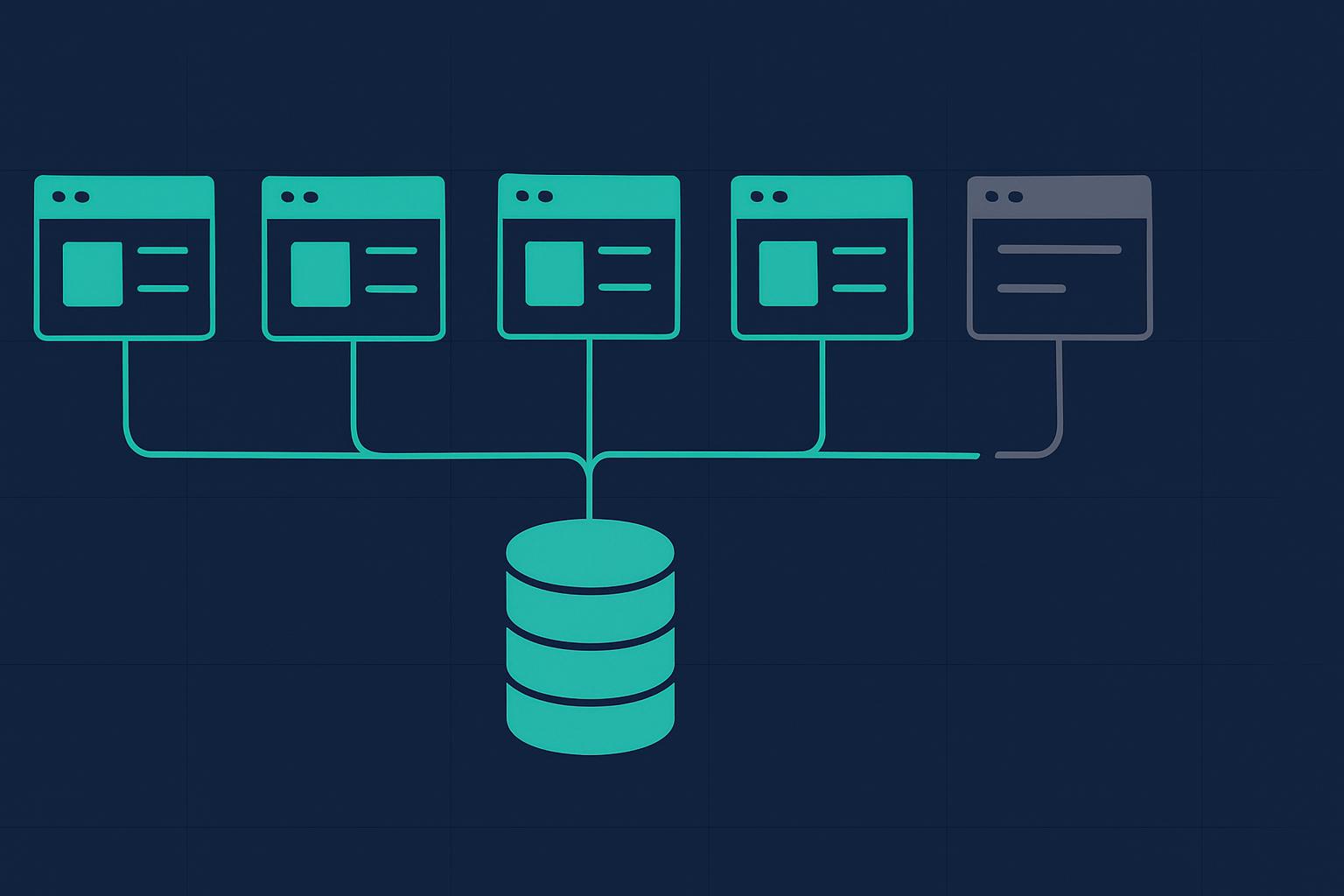
Most AI app builder round-ups list a database checkmark and move on. That checkmark hides the decision that actually matters for anyone building something they intend to keep. There are three very different things a builder can mean when it says it handles your data:
- It provisions a real, standard PostgreSQL database you own and can migrate off the platform.
- It connects to a Postgres or MySQL you already run.
- It stores your data in a proprietary datastore that speaks its own API, not SQL.

pg_dump, restored anywhere, queried by any BI tool, and read by the next engineer you hire without a translation layer. When an AI builder hands you a real Postgres, the data outlives your relationship with the builder. When it hands you a proprietary store, your app code may be portable while your data is not, and that gap is where migration projects go to die.
This comparison scores five AI app builders on that single axis: do you walk away with a real, portable SQL database, and how much control do you have over it. One caveat worth carrying with you: a Postgres dump covers rows, not uploads. On most of these platforms the files your users upload live in a separate object store that the database export does not touch, which we cover in where AI app builder file storage actually lives.
The 5 best AI app builders with PostgreSQL in 2026
We limited the scorecard to builders that generate an application AND back it with a genuine SQL database you can reach with standard tools. Every claim below reflects each platform's 2026 public product behavior; database backends were confirmed against each vendor's own docs.
Scroll to see more
| Builder | SQL database backend | You own / can export it | Best for |
|---|---|---|---|
 Lovable Lovable | Managed Supabase (Postgres) | Yes, full Supabase project | Owning a portable Postgres |
 Bolt.new Bolt.new | Supabase (Postgres) integration | Yes, your Supabase project | Fast web MVPs on Supabase |
 v0 v0 | Neon / Vercel Postgres | Yes, Neon project | Vercel-native teams |
 Replit Replit | Built-in Postgres (Neon-backed) | Yes, standard connection string | All-in-one IDE + DB |
 Base44 Base44 | Managed Postgres | Partial, export varies | Non-technical relational apps |
Lovable: the strongest ownership story
pg_dump, or self-host later. If a portable database is a hard requirement, Lovable's Supabase pairing is the cleanest answer in 2026. Its weak spots are documented elsewhere, including SEO output and stability, but on the "real, ownable SQL database" axis it is the pick for most teams. See Lovable for current plan details.
Bolt.new: the same Supabase stack, faster iteration
v0: the Vercel-native choice
Replit: all-in-one IDE with a built-in Postgres
Base44: relational apps for non-technical builders
The AI app builders that do NOT give you SQL (and when that is fine)
Not every popular AI app builder is a SQL builder, and the honest version of this comparison has to say so. The clearest example is 
That is not a disqualification, it is a fit question. If you are shipping a web app where the builder owns the whole stack and you never plan to run raw SQL, point BI tools at the tables, or hand the database to a separate data team, a proprietary store is a non-issue. If any of those are on your roadmap, a builder in the table above is the safer call. This is the same reasoning we used when we compared builders for internal tools, where connecting to an existing database is often the whole point.
The Reddit builder community reaches the same split. In one widely read 2026 thread comparing the current AI builders, the recurring advice is to pick based on where your data has to live, not on which demo looks best (r/VibeCodersNest, 2026).
How we scored this
Builderdex scores one use case at a time against named criteria rather than assigning a single global rank, because the "best" builder changes with what you are building. For this comparison the criteria were: provisions or connects a real SQL engine, gives you a portable database you can export, and exposes a standard connection string. Our full approach is on the methodology page. If self-hosting the database yourself is the priority, the open-source side of this question is covered in our open-source self-host comparison.
Bottom line
If PostgreSQL is a requirement and not a nice-to-have, choose a builder that leaves you holding a standard, exportable database. Lovable and Bolt.new lead on the Supabase-backed stack, v0 fits Vercel and Neon teams, Replit wins on all-in-one convenience, and Base44 serves non-technical builders who still want relational data. Match the builder to where your data must live, and the shortlist gets short fast.

Written by
Builderdex EditorialThe Builderdex editorial desk builds side-by-side scorecards of AI app builders, one use case at a time.
Frequently asked questions
What is the best AI app builder with PostgreSQL in 2026?
Lovable is the best pick for most teams in 2026 because it provisions a managed Supabase PostgreSQL database that you own and can export or self-host. Bolt.new is a close second on the same Supabase stack, v0 leads for Vercel and Neon teams, Replit wins for an all-in-one IDE with a built-in Postgres, and Base44 suits non-technical builders who still want a real relational schema.
Do all AI app builders use a SQL database?
No. Some AI app builders back your app with a real PostgreSQL or MySQL database, while others use a proprietary datastore that speaks its own API rather than SQL. Totalum, for example, produces stable Next.js apps but stores data in its own TotalumSDK datastore, not PostgreSQL, so if you need portable SQL you should choose a builder that provisions Postgres.
Why does PostgreSQL portability matter for an AI-built app?
A standard PostgreSQL database can be exported with pg_dump, restored anywhere, queried by any BI tool, and read by any engineer without a translation layer. That means your data outlives your relationship with the builder. A proprietary datastore can leave your code portable while your data is locked to the platform.
Which AI app builder gives you the most database ownership?
Lovable currently offers the strongest ownership story because its Supabase project is a normal PostgreSQL database you fully control and can migrate off the platform. Replit and v0 also expose standard Postgres connection strings via Neon-backed databases.
Is Base44 a good choice for a PostgreSQL app?
Base44 is the fastest generator in this group and produces polished UIs on a managed Postgres, which fits non-technical founders who want a real relational schema. Before committing, confirm how cleanly you can export your data, since portability off the platform varies.
When is a non-SQL AI app builder actually fine?
A proprietary datastore is a non-issue when the builder owns the whole stack, you never plan to run raw SQL, you will not point external BI tools at the tables, and you will not hand the database to a separate data team. If any of those are on your roadmap, choose a PostgreSQL-backed builder instead.
Related comparisons
Best AI app builder for internal tools in 2026
A 6-builder scorecard for internal tools in June 2026: Totalum, Retool, Tooljet, Lovable, Bolt.new, and Base44 ranked against bundled auth, SQL connectors, RBAC, custom domains, code ownership, and per-team cost.

Best Open-Source AI App Builder to Self-Host (2026)
A self-host-first comparison of the best open-source AI app builders in 2026: Appsmith, Budibase, ToolJet, NocoBase and Reflex, scored on license, deployment and where the AI features actually live.